
Welcoming the opening of the first EU accession cluster for Ukraine and Moldova
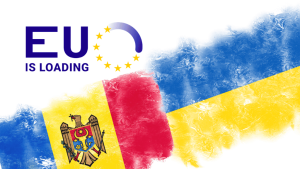
The Young European Federalists welcome the decision by the European Union to open the first accession negotiation cluster with Ukraine and the Republic of Moldova. This step, taken following the unanimous agreement of all EU member states, represents a meaningful advancement in the European integration process for both countries. It reflects years of sustained reform efforts, political courage, and the shared understanding that the future of Europe is strengthened by the inclusion of democratic partners committed to the rule of law.
We recognize that opening the first cluster on fundamentals is both a milestone and a starting point. Under the EU’s revised enlargement methodology, this cluster is opened first but it is expected to be closed last, ensuring that the most essential conditions for EU membership receive sustained attention throughout the negotiation process.
We commend the authorities and the peoples of Ukraine and the Republic of Moldova for their perseverance in pursuing deep and irreversible reforms, even under extraordinarily difficult circumstances. Ukraine, in particular, has continued to implement legislative and institutional changes while defending its territorial integrity and sovereignty against ongoing war of aggression. Moldova has demonstrated remarkable resilience in advancing its European path despite persistent hybrid threats and energy vulnerabilities.
These efforts are not just technical preconditions for accession; they are investments in the long-term stability, democracy, and prosperity of the entire European continent. By aligning with European standards, both countries are strengthening the very values upon which the European Union is founded.
JEF Europe also acknowledges the constructive role played by all EU member states in reaching the consensus required to open this cluster. We note the positive contributions of the current Cypriot Presidency of the Council of the European Union in advancing the enlargement agenda. This was also only possible after the defeat of Viktor Orbán in Hungary who had been blocking this process essentially with a veto.
This process, however, outlines the shortages of the current enlargement procedure, which has led to a de facto standstill of the enlargement process in the last decade.
We call upon all EU member states to preserve the political unity that has made this moment possible. Enlargement policy, by its nature, requires patience and strategic vision. We urge member states to avoid unilateral actions that could slow down the negotiation process or create new obstacles. At the same time, we encourage the European Commission and the European External Action Service to provide continued technical and financial assistance, specifically in the negotiations on the upcoming Multiannual Financial Framework, to both candidate countries to help them meet the required benchmarks.
We also believe that the EU should consider the gradual integration of Ukraine and Moldova into certain EU policies and programs even before the formal completion of accession negotiations, such as the single market, energy, transport, and digital connectivity, as a way to bring tangible benefits to their citizens and to build momentum for further reforms. Introducing EU roaming in the two countries is a welcome first step.
The opening of accession clusters with Ukraine and Moldova sends a clear signal of the European Union’s commitment to supporting the European aspirations of countries that share its democratic values and that face external pressure aimed at undermining their sovereignty.
JEF Europe reaffirms its support for Ukraine and the Republic of Moldova as full members of the EU in the future. This would bring lasting stability, economic opportunity, and democratic reinforcement to the continent as a whole, once all accession conditions are fulfilled.
After all: EU is loading!