
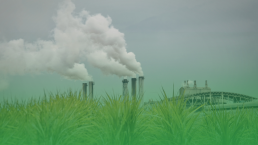
Towards a green, globally competitive and digital European industry
Submitted by Political Commission 2: Internal European Affairs
Re-adopted and amended to its current form by the Federal Committee on 19 April 2026 in Belgrade, Serbia.
European industry stands at a turning point. High energy costs, geopolitical tensions and growing global subsidy races are putting pressure on Europe’s competitiveness. At the same time, ambitious climate and digital goals require profound transformation.
JEF Europe,
- Recognising that a strong and innovative industrial base is fundamental to Europe’s prosperity, social stability and strategic autonomy, providing the technologies, infrastructure and production capacities necessary to drive the green and digital transitions and ensure long term economic resilience;
- Envisioning a European clean industrial transformation that scales up net-zero and carbon-negative technologies, advanced manufacturing and secures critical infrastructure, strengthening Europe’s resilience in key sectors;
- Recalling that European industry provides 35 million jobs, accounts for 80% of goods exports, 22.3% of GDP and is the key driver for the EU’s position as a top global provider of high-tech products;
- Emphasising that only a Federal Europe, endowed with autonomous fiscal authority, possesses the capacity to deploy the resources necessary for the renewal of European industry;
- Highlighting the role of small and medium-sized enterprises (SMEs) often acting as key local suppliers;
- Welcoming the Clean Industrial Deal as the EU’s renewed framework to strengthen industrial competitiveness while accelerating decarbonisation, reinforcing the Single Market and scaling up clean technologies, in line with the EU’s climate objectives;
- Welcoming the Corporate Sustainability Reporting Directive (CSRD) requiring large companies to disclose environmental, social and governance information according to the European Sustainability Reporting Standards (ESRS), enhancing transparency and accountability on sustainability issues;
- Acknowledging that industrial activities are also a strong driver of environmental pollution and carbon emissions;
- Deeply convinced that Europe’s industry can and should be transformed to meet
the Paris Agreement, the UN Sustainable Development Goals (SDGs), binding emissions targets and the goal of climate neutrality by 2050 set in the EU climate law, and initiatives such as the European Green Deal; - Emphasising the need to protect workers’ health, safety and well being in the European industry, while addressing job losses, precarious employment models, and the social consequences of globalisation and delocalisation that undermine the stability and status of industrial workers and young people;
- Acknowledging that the EU’s industrial and economic power translates into normative power, and that all these powers can be used to contribute to global development, as well as promote human rights and environmental justice in the world through smart trade agreements;
- Welcoming the entry into force of the Carbon Border Adjustment Mechanism (CBAM), the strengthened Emissions Trading System (ETS) and the Corporate Sustainability Due Diligence Directive, stressing the need for their effective implementation to prevent carbon leakage, ensure respect for human rights, environmental standards in global supply chains and uphold fair competition;
- Recognising that increasingly global and complex value chains create strategic dependencies, reduce economic resilience and make it harder to enforce fair competition and sustainable standards;
- Deeply concerned about the potential misuse of industrial policy as a weapon by revisionist autocracies, through restrictions on the export of critical raw materials, energy sources or other key technologies or services;
- Welcoming the European Commission’s initiatives to strengthen Europe’s open strategic autonomy including the launch of Important Projects of Common European Interest (IPCEIs) in key strategic sectors such as microelectronics, hydrogen and batteries, mobilising an expected total of EUR 92.2 billion in public and private investment, as well as the in depth review of strategic areas to identify and reduce critical dependencies in European supply chains;
- Recognising the EU’s shift towards a more strategic industrial and trade policy, illustrated by recent initiatives such as the Industrial Accelerator Act, which seek to strengthen resilient clean technology supply chains and prioritise cooperation with trusted economic partners;
- Emphasising that Europe’s future industry depends on sufficient investment in new innovations, technology, Research and Development (R&D) as well as skill training, which should be a joint European endeavour to boost competitiveness, specialisation and sustainability;
- Recognising that in high-tech fields in particular, much innovation is done by large companies, and thus it may be necessary to accept more mergers between European companies to create European champions in key industries;
- Recognising that open standards and protocols are instrumental in reducing dependency on foreign technology, fostering innovation, and creating a level playing field for businesses, particularly SMEs, while also supporting interoperability, sustainability, and strategic autonomy;
- Reaffirming JEF Europe’s resolutions that are interconnected, complement the need for an industrial transition and propose concrete solutions: “A European Transition to a Circular Economy”, “Calling for an ethical and efficient EU policy framework on Artificial Intelligence”, “For a United Digital Europe”, “Environment does not stop at borders: Towards a Sustainable Europe and a Sustainable Global Climate Policy”, “Better integrated and more sustainable
mobility infrastructure for an Ever Closer Union”, ; “Advancing the European Union’s Social Dimension”, “On the creation of a Fiscal Union in the Eurozone”, and “Towards sustainable, reliable and affordable energy for Europe”.
JEF Europe therefore:
- Calls on the European industry to accelerate investment in decarbonisation, digitalisation and strategic value chains to secure Europe’s industrial leadership and strategic autonomy by 2030;
- Calls for the European Commission and Member States to safeguard the integrity of the Single Market through the elimination of remaining trade barriers, ensuring consistent enforcement of EU competition and merger rules whilst maintaining a level playing field within the EU and globally;
- Calls on the EU to better coordinate with its global partners and avoid expensive subsidy races in areas where it is desirable to diversify our supply or reduce our strategic dependency, such as, but not limited to, battery technology, microchips, critical raw materials, and energy sources;
- Supports a European relocalisation of vital industrial activities to provide for more of Europe’s own consumption, ensuring shorter and more resilient supply chains and creating long-term, well-paid jobs for European workers;
- Calls on the EU and Member States to ensure robust implementation of the Carbon Border Adjustment Mechanism (CBAM), using its revenues to support the decarbonisation of energy intensive industries while preserving competitiveness and avoiding unnecessary trade disputes;
- Calls on the EU, Member States and industries for a more decisive move towards a circular economy through the implementation of a cascading use and cradle-to-cradle principles in our production chains, waste management and through a life-cycle assessment of critical components and raw materials;
- Urges the EU to defend high social and environmental standards in its trade policy without descending into protectionism, by coupling ambitious climate policies with active diplomacy to avoid retaliation;
- Urges the European Commission to develop concrete measures to reduce the dependency on critical raw materials, strengthening recycling and recovery processes like chemical recycling and substitution with circular materials, and to reduce the export of valuable waste materials in order to retain resources within the EU;
- Calls on the European Commission to put forward concrete measures to reduce plastic use where sustainable alternatives are available, while reinforcing recycling efforts;
- Calls upon the European Commission to ensure that the extraction and processing of natural resources, within and outside the EU, fully respect environmental standards such as the DNSH principle as well as the rights of local communities and indigenous people, guaranteeing their participation in decision-making processes;
- Calls upon the EU and Member States to develop on their territories critical raw material extraction that is safe, as well as socially and environmentally responsible, to boost our own production and reduce our need for imports as well
as our dependencies; - Expects the EU’s and Member States’ industrial strategies to support the fight against in-work poverty and inequality, as well as to ensure strong and equitable workers’ rights with equal access and opportunities guaranteed for, but not limited to, women, minority workers, and young people;
- Calls for EU funds aimed at industrial transition, such as the Just Transition Fund, to become real funds of solidarity, that ensure fair distribution across society, between regions and countries, underlining the importance of European territorial cohesion;
- Encourages the EU and the Member States to strengthen support for startups, SMEs and larger companies by fostering already existing and emerging networks across Europe, promoting the exchange of knowledge and best practices on sustainable digitalisation as well as enhancing their capacity to grow and compete globally;
- Calls for the EU to significantly strengthen and expand sovereign European investment instruments, including dedicated technology sovereignty funds, to support the development and scaling of strategic digital and industrial
technologies, ensure European ownership of critical assets, and reduce dependency on non-European capital and investors; - Calls for the strategic integration of open standards in key industrial sectors and urges the European Commission and Member States to provide targeted support, including funding, training, and regulatory incentives, to facilitate
their adoption, with a focus on SMEs.
Adopted first by the online Federal Committee on 26 June 2021. Re-adopted and amended by the Federal Committee on 11 November 2023 in Madrid, Spain; and then re-adopted and amended to its current form by the Federal Committee on 19 April 2026 in Belgrade, Serbia.