
Hungary’s election reveals how Orbán turns national power against Europe
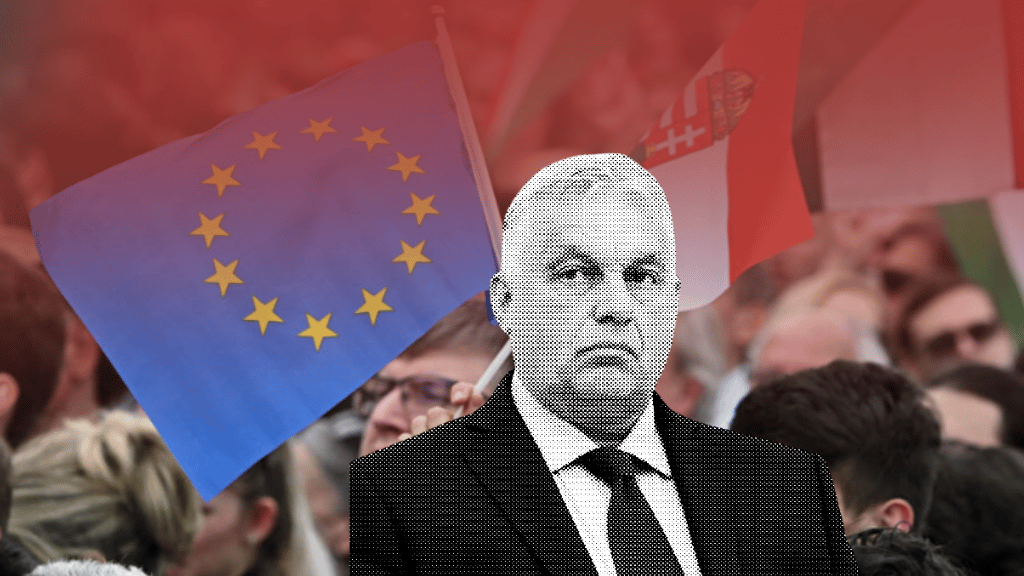
The Hungarian parliamentary elections of 12 April are a test for Europe’s political future.
After more than fifteen years in power, Prime Minister Viktor Orbán has consolidated a system that undermines checks and balances, restricts media pluralism and blurs the line between state resources and political campaigning. At the same time, Hungary remains fully embedded in the European Union, exposing a structural contradiction at the heart of the European project.
The current electoral campaign in the country shows how easily the EU can be turned into a political adversary because the European political union remains incomplete. In Fidesz’ campaign, European institutions and leaders are portrayed as external actors threatening national sovereignty, allowing domestic political competition to be reframed as a confrontation against Europe itself. Yet, it is the current ruling elite in Budapest which undermines Europe’s strategic interests by colliding with the Kremlin.
Orbán has built a political strategy that presents the EU as an enemy while continuing to benefit from it. Violations of the rule of law thus become politically manageable internally, yet structurally difficult to sanction at European level as the 7 TFEU requires unanimity of member states. Meanwhile, Orbán’s repeated obstruction of common European decisions, including on support to Ukraine, demonstrates how national executives can instrumentalise institutional weaknesses for domestic political purposes. This reflects the limits of an intergovernmental Europe.
At the same time, polls suggesting that Orbán may face a genuine electoral challenge show that democratic change remains possible even in highly uneven political environments. As Young European Federalists, we believe the Hungarian elections underline the urgency of completing the federal construction of the Union. A Union capable of guaranteeing fundamental rights cannot remain structurally dependent on the political will of national governments alone.
Europe requires a true political union, and Hungarian citizens deserve a democracy that is not taken hostage by the political interests of the government of the day.
This statement is based on the resolution “Regarding the protection of Rule of Law”
For questions, please contact Debora Striani.